Table of Contents
- The 15 AI Websites Worth Trying
- How We Selected These AI Websites
- Common Mistakes When Exploring AI Websites
- FAQ
If you are looking for AI websites worth trying right now, the hardest part is not finding options. It is filtering out the noise.
There are now AI tools for writing, coding, research, image generation, video editing, audio production, presentations, and workflow automation. But many lists mix experiments, niche tools, and overhyped launches into one long catalog that is hard to use. That is not especially helpful if what you really want is a practical shortlist.
This guide is built for that use case. Instead of trying to list every AI website on the market, it focuses on 15 tools that are worth trying because they are useful, widely relevant, or clearly strong in a specific category.
Some are all-purpose assistants. Some are best-in-class for coding, research, images, video, or voice. Together, they give a much more realistic picture of the AI websites most people should care about in 2026.
sbb-itb-bf47c9b
Quick Shortlist
If you only want the fast answer, start here:
-
ChatGPTfor all-purpose everyday AI work -
Claudefor thoughtful long-form writing and analysis -
Perplexityfor cited AI search and research -
Cursorfor AI-native coding workflows -
Midjourneyfor image generation and visual exploration -
Runwayfor AI video creation and editing -
Canva Magic Studiofor design and fast visual production -
Zapier Agentsfor workflow automation across your stack
Best AI Websites by Category
| Category | Best pick | Why it stands out |
|---|---|---|
| Everyday AI assistant | ChatGPT | broad use cases across writing, research, analysis, coding, and multimodal tasks |
| Long-form thinking and writing | Claude | strong for structured writing, analysis, and complex documents |
| AI search and research | Perplexity | answer-engine workflow with citations and current web retrieval |
| AI coding editor | Cursor | codebase-aware editor built around AI-native development |
| AI coding inside GitHub workflows | GitHub Copilot | strong fit if your team already lives in GitHub and modern IDEs |
| Image generation | Midjourney | standout image quality and strong stylistic control |
| Video generation and creative video AI | Runway | strong for AI video workflows and creative production |
| Fast design workflow | Canva Magic Studio | broad AI design toolkit inside a familiar visual suite |
| Workspace AI | Notion AI | combines notes, docs, search, and workflow help in one workspace |
| Writing improvement | Grammarly | practical AI assistance for editing, rewriting, and clarity |
| AI presentations | Gamma | very fast AI deck and visual-document creation |
| Podcast and talking-head editing | Descript | strong AI editing workflow for audio and video creators |
| Voice generation and dubbing | ElevenLabs | advanced AI voice creation and audio tooling |
| AI music generation | Suno | fast and accessible AI music creation |
| AI workflow automation | Zapier Agents | connects AI actions to thousands of apps and business workflows |
Strategic Framework for AI Product Development
The 15 AI Websites Worth Trying
1. ChatGPT
ChatGPT is still one of the most useful AI websites to start with because it covers the widest range of jobs well enough to matter. It can help with writing, summarizing, brainstorming, coding, file analysis, image work, web-grounded tasks, and more advanced multi-step workflows.
That breadth matters because many people are not looking for one hyper-specialized tool first. They are looking for an AI website they can actually use every day. ChatGPT remains strong in that role.
Best for
- general-purpose AI help
- writing and ideation
- coding support
- file analysis and everyday productivity
Why it stands out
- broad multimodal workflow
- strong general-purpose capability
- useful for both casual and professional tasks
2. Claude
Claude is one of the strongest options when the task is more document-heavy, reasoning-heavy, or writing-heavy. It is especially useful for users who need a calmer, more structured assistant for long text, deeper thinking, and careful synthesis.
That makes it a particularly strong fit for strategy work, document analysis, rewriting, and thoughtful drafts.
Best for
- long-form writing
- analysis and reasoning
- document-heavy workflows
- structured drafting
Why it stands out
- strong long-context work
- clear writing support
- reliable for high-focus knowledge tasks
3. Perplexity
Perplexity is one of the most useful AI websites for people who want cited answers instead of a generic chatbot response. Its answer-engine model is built around web-grounded retrieval and linked sources, which makes it a very practical option for research, market scans, and current-information lookups.
It is especially strong when you want an answer plus a path to verify the answer.
Best for
- research
- cited answers
- current-event and web-based questions
- fast background reading on new topics
Why it stands out
- web-grounded answer engine
- citations and links built into the workflow
- strong fit for research rather than only conversation
4. Cursor
Cursor is one of the clearest examples of an AI website becoming a true workflow product rather than a novelty layer. It is built around the idea that coding with AI should happen inside the editor, inside the codebase, and across real development tasks rather than through a detached chatbot.
That is why it has become one of the strongest AI tools for developers and technical teams.
Best for
- code editing inside an AI-native editor
- understanding and changing existing codebases
- agent-style coding workflows
Why it stands out
- codebase-aware editing
- natural-language coding workflow
- strong developer adoption
5. GitHub Copilot
GitHub Copilot is a top AI website and platform for teams that already work inside GitHub and modern IDEs. It is especially useful when the AI layer needs to fit the existing engineering workflow instead of replacing it.
It can support autocomplete, chat, command-line help, and more agent-like coding tasks depending on the plan and environment.
Best for
- software teams already using GitHub heavily
- coding help inside existing developer workflows
- collaboration between editor, repo, and AI assistance
Why it stands out
- native fit with GitHub workflows
- strong IDE integration
- broad adoption across engineering teams
6. Midjourney
Midjourney remains one of the strongest AI websites for image generation when the goal is visual exploration, concept development, moodboarding, or stylized output. It is not just about generating an image quickly. It is about generating images with a distinct visual character.
That makes it particularly valuable for creative exploration, brand concepts, visual prompts, and design inspiration.
Best for
- image generation
- visual ideation
- concept art and styling
- moodboards and exploration
Why it stands out
- consistently strong image quality
- distinctive aesthetic results
- flexible prompt-driven image workflows
7. Runway
Runway is one of the most important AI websites to watch if your work touches video. Its product ecosystem is built around AI video creation, generative editing, and creative-media workflows.
It is especially useful for teams experimenting with short-form content, visual storytelling, concept video creation, and AI-enhanced production.
Best for
- AI video generation
- creative video editing
- experimental media workflows
- visual storytelling
Why it stands out
- strong AI-video identity
- useful for creators and media teams
- one of the clearest AI-first products in video creation
8. Canva Magic Studio
Canva Magic Studio is one of the most practical AI websites for people who do not want a specialist creative toolchain for every single task. It brings AI generation into a familiar design environment, which makes it useful for marketing assets, social visuals, websites, presentations, and quick creative production.
The advantage here is not only AI. It is AI plus an editor many teams already understand.
Best for
- fast design work
- marketing assets
- social content
- teams that want AI inside an approachable visual suite
Why it stands out
- AI across multiple design workflows
- easier learning curve than many specialist creative tools
- broad business and marketing relevance
9. Notion AI
Notion AI is useful because it does not try to be only a chatbot. It sits inside a broader workspace that already handles notes, docs, search, collaboration, and workflows. That makes it stronger for people who want AI inside their working environment rather than as a separate destination.
It is especially useful for summarizing notes, drafting documents, searching knowledge, and keeping information work inside one system.
Best for
- workspace AI
- note-taking and summaries
- document drafting
- internal knowledge and search workflows
Why it stands out
- AI inside a wider workspace product
- useful for ongoing team knowledge work
- strong fit for documentation-heavy workflows
10. Grammarly
Grammarly remains one of the most practical AI websites for day-to-day communication. It is not the flashiest AI tool, but it is one of the easiest to apply because the job is so clear: improve writing, make it cleaner, and help it land better.
That clarity makes it especially valuable for email, documents, messaging, and cross-team communication.
Best for
- editing and rewriting
- business writing
- communication quality
- reducing friction in everyday writing work
Why it stands out
- extremely practical use case
- works across many everyday workflows
- focused on clarity and polish rather than only generation
11. Gamma
Gamma is one of the most useful AI websites for people who need to turn rough ideas into polished visual documents quickly. It is especially strong for decks, internal presentations, sales materials, launch presentations, and lightweight webpages.
The key advantage is speed plus structure. It helps people move from an outline or prompt to something presentable much faster than traditional slide-building workflows.
Best for
- presentation creation
- launch decks
- visual documents
- fast idea-to-deck workflows
Why it stands out
- very fast AI presentation generation
- easy refinement and sharing
- good fit for teams who communicate through decks often
12. Descript
Descript is one of the strongest AI websites for creators and teams who work with spoken content. It combines transcription, editing, AI cleanup, video assistance, and publishing-oriented tools in a workflow that feels much more practical than traditional editors for many use cases.
That makes it especially good for podcasts, talking-head videos, internal training content, and creator workflows.
Best for
- podcast editing
- video editing for spoken content
- transcript-first editing workflows
- content repurposing
Why it stands out
- transcription-first editing model
- strong AI cleanup features
- useful for both creators and business teams
13. ElevenLabs
ElevenLabs is one of the top AI websites for voice generation and audio AI. It is useful for voiceovers, dubbing, speech generation, conversational experiences, and increasingly broader audio workflows.
This is one of the clearest category leaders if voice is the thing you care about most.
Best for
- text to speech
- voiceovers
- dubbing and localization
- voice products and conversational audio workflows
Why it stands out
- advanced voice quality
- broad audio AI product depth
- strong fit for creators, media teams, and developers
14. Suno
Suno is one of the most recognizable AI websites for music generation because it turns a complex creative workflow into something much more accessible. Instead of needing a full music-production stack to explore an idea, users can move from prompt to song quickly.
That makes it especially compelling for experimentation, demos, social content, and fast creative exploration.
Best for
- AI music generation
- fast concept songs
- creative experiments
- content creators who want music without a full production workflow
Why it stands out
- very accessible creation flow
- fast path from prompt to track
- strong visibility in AI music generation
15. Zapier Agents
Zapier Agents matters because it shows a different side of the AI website market. Not every valuable AI product is about content generation. Some of the biggest wins come from connecting AI to real workflows across business tools.
Zapier's AI direction is especially useful when the goal is not "generate something fun," but "make work move automatically across the tools we already use."
Best for
- workflow automation
- AI agents across business apps
- operational use cases like routing, support, lead handling, and process automation
Why it stands out
- connects AI actions to thousands of apps
- strong business workflow relevance
-
useful for operational teams, not only creators and knowledge workers
End-to-End Build Framework for AI Products
How We Selected These AI Websites
This is not a list of every AI tool on the market. It is a practical shortlist based on five filters.
1. Real usefulness
Each tool needed a clear job that people actually care about.
2. Strong category position
We focused on tools that are either widely recognized or clearly strong inside a specific category.
3. Product clarity
The strongest AI websites make it easy to understand what they do and who they are for.
4. Current relevance
We prioritized tools that are still clearly relevant in the 2026 AI landscape, not only products that had one hype cycle and faded.
5. Variety across workflows
A useful list should not be fifteen chatbots. It should reflect how people actually use AI: chat, research, coding, images, video, voice, music, presentations, and automation.
What Type of AI Website Should You Try First?
That depends on what kind of work you actually do.
- If you want one all-purpose tool, start with ChatGPT or Claude.
- If you do a lot of research, start with Perplexity.
- If you write code every day, start with Cursor or GitHub Copilot.
- If you work visually, try Midjourney, Runway, or Canva Magic Studio.
- If you create content with voice or video, try Descript and ElevenLabs.
- If you want automation more than generation, try Zapier Agents.
The best first tool is not always the most famous one. It is the one closest to the repetitive work you already do.
Achieving Effective Conversion
Common Mistakes When Exploring AI Websites
Trying too many tools at once
People often sign up for eight AI products in one week, then conclude none of them are useful because the workflow becomes messy. Start with one tool per job.
Expecting one tool to solve everything
General assistants are useful, but specialized tools still win in categories like coding, image generation, voice, and workflow automation.
Judging only the first output
Many AI websites look impressive for five minutes. The more useful question is whether the product still helps after the first test, when you need repeatable value.
Ignoring workflow fit
A tool can be powerful and still wrong for your team. The best AI website for a designer is not the same as the best one for an operations lead or a founder shipping launch pages.
How to Apply This in Unicorn Platform
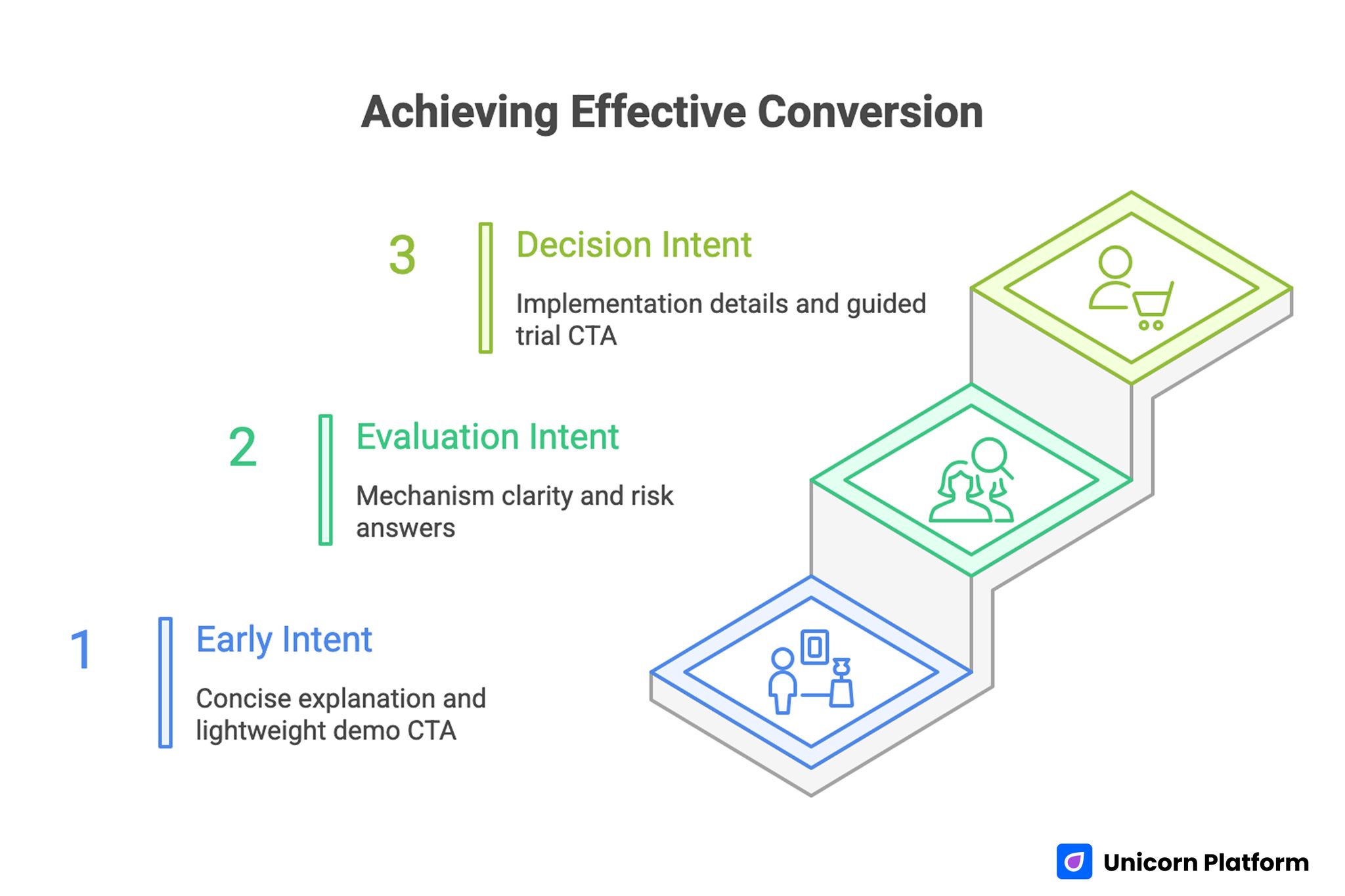
If you are building content, directories, or landing pages around AI products, this list can work as a benchmark for message clarity.
Look at how the strongest AI websites do three things:
- explain the job of the product quickly
- show a simple next step
- reduce confusion before they ask for commitment
That pattern matters if you are building your own AI product page. If you want a practical next step, this guide on how to create an AI landing page is useful for turning a promising tool idea into a clearer launch page. If you are still comparing builder options, best AI landing page builders in 2026 is the more direct follow-up.
FAQ: Top AI Websites in 2026
What is the best AI website overall right now?
For most people, ChatGPT is still one of the best all-purpose AI websites because it covers the widest range of everyday use cases well.
Which AI website is best for research?
Perplexity is one of the strongest choices for research because it is built around cited answers and current web retrieval.
Which AI website is best for coding?
Cursor is one of the strongest AI-native coding environments, while GitHub Copilot is a strong option for teams already working deeply inside GitHub workflows.
Which AI website is best for images?
Midjourney remains one of the strongest options for image generation and visual exploration.
Which AI website is best for video?
Runway is one of the clearest category leaders for AI video generation and creative video workflows, while Descript is especially strong for spoken-content editing.
Which AI website is best for voice?
ElevenLabs is one of the top voice-focused AI platforms for text to speech, dubbing, and audio generation.
Which AI website is best for workflow automation?
Zapier Agents is one of the strongest options when your goal is to connect AI behavior to real tasks across business tools and apps.
Are free AI websites enough to start with?
Often yes. Many leading AI tools offer enough free or entry-level access to help you understand whether the category fits your workflow before you commit more deeply.
Final Takeaway
The top AI websites in 2026 are not all trying to do the same job. Some are general assistants. Some are research tools. Some are built for coding, images, video, voice, music, presentations, or business automation.
That is exactly why a shortlist matters. The most useful AI website is usually not the one with the loudest hype cycle. It is the one that solves a real workflow problem for you repeatedly.
If you start with that lens, this category becomes much easier to navigate. Pick one tool for the job you do most often, test it in a real workflow, and then expand from there.

